
The Regional Dialogues
The Uluru Statement from the Heart – and subsequently the push for the Voice - emerged from a series of regional dialogues held across the country, culminating in a National Constitutional Convention at Uluru in 2017.
To understand the Voice, it is critical to understand that it is the product of a process of consultation and discussion between an extraordinarily diverse group of Aboriginal and Torres Strait Islanders. The Dialogues were a significant step in a national attempt to give voice to our First Nations people, to give them a space to discuss and reflect on their own priorities
The Voice Referendum is the culmination of nearly a decade’s work of consultation and discussion with and between Australia’s First Nations people.
To understand the Voice, it is critical to understand that it is the product of a process of consultation and discussion between an extraordinarily diverse group of Aboriginal and Torres Strait Islanders. The Dialogues were a significant step in a national attempt to give voice to our First Nations people, to give them a space to discuss and reflect on their own priorities
The Voice Referendum is the culmination of nearly a decade’s work of consultation and discussion with and between Australia’s First Nations people.
For an overview of the Uluru Statement and the Dialouges, and their impact in influencing the design of the Voice constitutional proposal, see this Expert Explainer from two leading legal experts invovled in the Referendum Council process
Background – 2015 and the Referendum Council
The proximate origin of the Dialogues - ultimately the Uluru Statement from the Heart – was the bipartisan appointment of the Referendum Council in December 2015. The Council was designed to identify the best steps in moving Australia towards the constitutional recognition. As the Council website notes:
|
|
Our job was to advise the Prime Minister and the Leader of the Opposition on progress and next steps towards a successful referendum to recognise Aboriginal and Torres Strait Islander peoples in the Constitution. Referendum Council, The Council
|
|
The council was made up of Indigenous and non-Indigenous community leaders and included:
|
|
The council invited all Australians to share their views on constitutional change regarding Aboriginal and Torres Strait Islander peoples. To that end, the Council released a "Discussion Paper on Constitutional Recognition of Aboriginal and Torres Strait Islander Peoples" in October 2016 to guide discussion. This broad consultation sought the views of all Australians on fundamental questions, such as: Do you support constitutional change? And, if you do, What form do you think change should take?
Over the same period, the council held a series of Indigenous consultations to give Aboriginal and Torres Strait Islander people the chance to say what meaningful recognition is to them. Indigenous people designed and led these consultations.
Over the same period, the council held a series of Indigenous consultations to give Aboriginal and Torres Strait Islander people the chance to say what meaningful recognition is to them. Indigenous people designed and led these consultations.
The Purpose of the Dialogues
The Dialogues were the principal act of consultation and discussion of the Referendum Council with Australia’s First Nations people.
The purpose of the Dialogues was to consult and educate, resulting in the most proportionally significant consultation process of First Nations peoples Australia has ever seen. As the Referendum Council notes:
The purpose of the Dialogues was to consult and educate, resulting in the most proportionally significant consultation process of First Nations peoples Australia has ever seen. As the Referendum Council notes:
|
|
The purpose was to reach broad agreement on whether and, if so, how, to ‘recognise’ Indigenous Australians in the Australian Constitution. The Dialogues also provided an opportunity for participants to discuss the main options for recognition, understand what they mean, combine or modify existing options and rank options in order of priority Referendum Council, Dialogues
|
|
Who Participated
Over a six-month period the Council travelled to 12 different locations around Australia and met with over 1,200 Aboriginal and Torres Strait Islander representatives. This was a truly nationally, and nationally significant, consultation:
|
|
The Dialogues engaged 1200 Aboriginal and Torres Strait Islander delegates – an average of 100 delegates from each Dialogue – out of a population of approximately 600,000 people nationally. |
|
Care was taken to ensure that a wide range of First Nations groups and interests were represented at the Dialogues. As the Referendum Council notes:
|
|
‘Attendance to the Dialogues was by invitation only. This ensured each Dialogue was deliberative and reached consensus on the relevant issues. Meetings were capped at 100 participants: 60% of places were reserved for First Nations/traditional owner groups, 20% for community organisations and 20% for key individuals. The Council worked in partnership with a host organisation at each location, to ensure the local community was appropriately represented in the process.’ Referendum Council, Dialogues
|
What the DIALOGUES Involved
The Dialogues were structured which provided delegates the opportunity to respond to the reform proposals outlined in the Referendum Discussion Paper of 2016.
The Dialogues discussions occurred over a six month period from December 2016 to May 2017.
The Dialogues discussions occurred over a six month period from December 2016 to May 2017.
|
The First Nations Regional Dialogues were convened in the following locations:
|
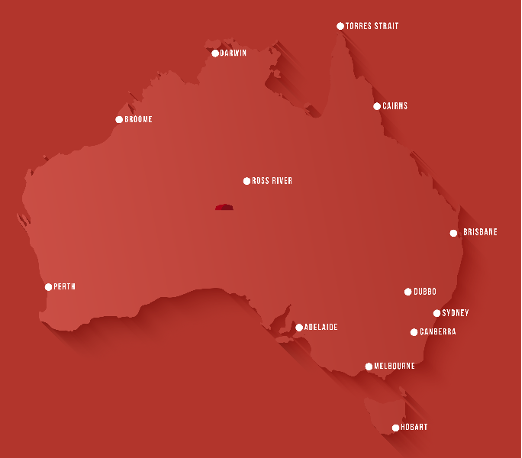
An information session hosted by the United Ngunnawal Elders Council was held in Canberra on 10 May 2017.
The National Constitutional Convention was then held at Uluru (23–26 May 2017). |
The Dialogues' OUtcomes - RECOMMENDATIONS
The objective was not to directly produce recommendations, but rather to promote an informed and productive national focal event for First Nation’s people, the National Constitutional Convention, which was held at Uluru (23–26 May 2017).
That National Constitutional Convention ultimately resulted in a consensus document on constitutional recognition, the Uluru Statement from the Heart.
That National Constitutional Convention ultimately resulted in a consensus document on constitutional recognition, the Uluru Statement from the Heart.
The Voice referendum directly flows from the advice and recommendation of the National Constitutional Convention and the Uluru Statement from the Heart. And at the foundation of this was the Dialogues – a key step in giving Voice to Australia’s First Nations peoples
The dialogues' outcomes - our story
The Uluru Statement organisation has produced an excellent interactive webpage 'Our Story' - it is reproduced below.
Please click on the small red cross at the top of the image below to begin the experience:
Please click on the small red cross at the top of the image below to begin the experience:
The authors of this site are very grateful for the work of the Referendum Council, Professor Megan Davis and others for assisting us in writing this section of the website.
Further Resources
|
|
Professor Megan Davis 2022 Kenneth Myer Lecture (2022)
The annual Kenneth Myer Lecture invites an eminent Australian to make a significant statement on a broad subject of interest to them, and is hosted by the National Library of Australia |
Other Sources
- Referendum Council, Discussion Paper on Constitutional Recognition of Aboriginal and Torres Strait Islander Peoples (2016)
- Referendum Council, Final Report of the Referendum Council (2017)
- Megan Davis Correspondence: Moment of Truth (2018) 69 Quarterly Essay